Introduction
Many parents ask the same question:
“What is the right age for my child to start robotics?”
Start too early and it may feel overwhelming. Start too late and you might miss a valuable learning window. The truth is, robotics is not about age alone – it’s about matching learning style to developmental stage.
In this guide, we break down the best ages to introduce robotics and how it supports your child’s growth at each stage.
Why Robotics Is Powerful for Child Development
Robotics is more than building machines. It teaches:
- problem-solving
- logical thinking
- creativity
- teamwork
- confidence
- patience
- resilience
When children build something that works, they experience real achievement. That feeling becomes motivation for lifelong learning.
Robotics combines science, technology, engineering, and creativity in a way that feels like play – not homework.
Ages 5 – 7: Exploration Stage
At this age, robotics should feel like a toy, not a lesson.
Children are developing motor skills and basic logic. The goal is exposure, not mastery.
Best focus areas:
- simple building blocks
- cause and effect
- beginner circuits
- guided play
- creativity exercises
Short sessions work best. Attention span is still growing.
The objective is curiosity, not complexity.
Ages 8 – 10: Foundation Stage
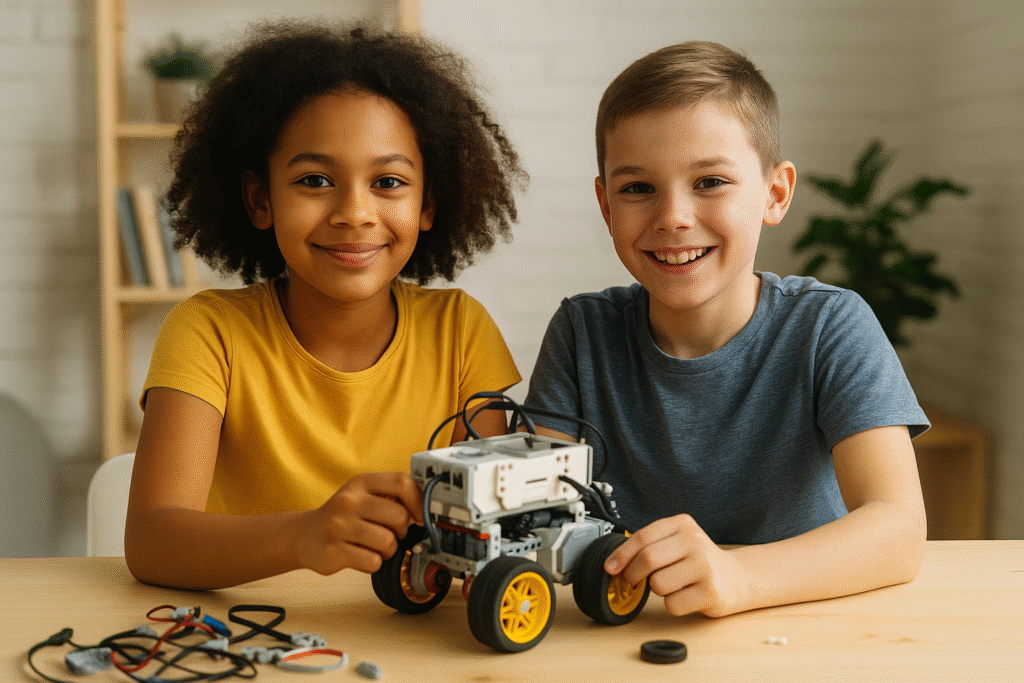
This is the golden age to begin structured robotics learning.
Children can now follow instructions, understand sequences, and start basic programming concepts.
They can learn:
- beginner coding logic
- sensors and motors
- step-by-step building
- teamwork projects
- troubleshooting
This stage builds confidence quickly because kids see visible progress.
They move from “playing” to “creating.”
Ages 11 – 14: Skill-Building Stage
At this stage, robotics becomes a serious learning tool.
Students can handle:
- advanced projects
- programming logic
- engineering design
- problem-solving challenges
- independent thinking
They begin to connect robotics to real-world applications.
This is where future engineers, innovators, and creators are born.
Robotics becomes identity-building, not just an activity.
Teen Years: Specialization Stage
Teenagers can dive deep into robotics and AI.
They can explore:
- competitive robotics
- advanced electronics
- automation projects
- artificial intelligence basics
- real-world engineering concepts
This stage prepares students for future careers in STEM fields.
Robotics stops being a hobby and becomes a pathway.
Conclusion
There is no single perfect age to start robotics.
The perfect age is when your child is curious and excited to explore.
Early exposure builds creativity. Structured learning builds skills. Advanced projects build confidence.
Robotics grows with your child – and becomes a foundation for future success.
If you want your child to begin a guided robotics journey, explore beginner-friendly programs that focus on hands-on learning and creativity.
Leave a Reply